Drew Schulz · 25 October 2026
Apothecary Records Indicate Yarrowroot's Contribution to 19th Century Pain Relief Mixtures in Isolated Rural Communities
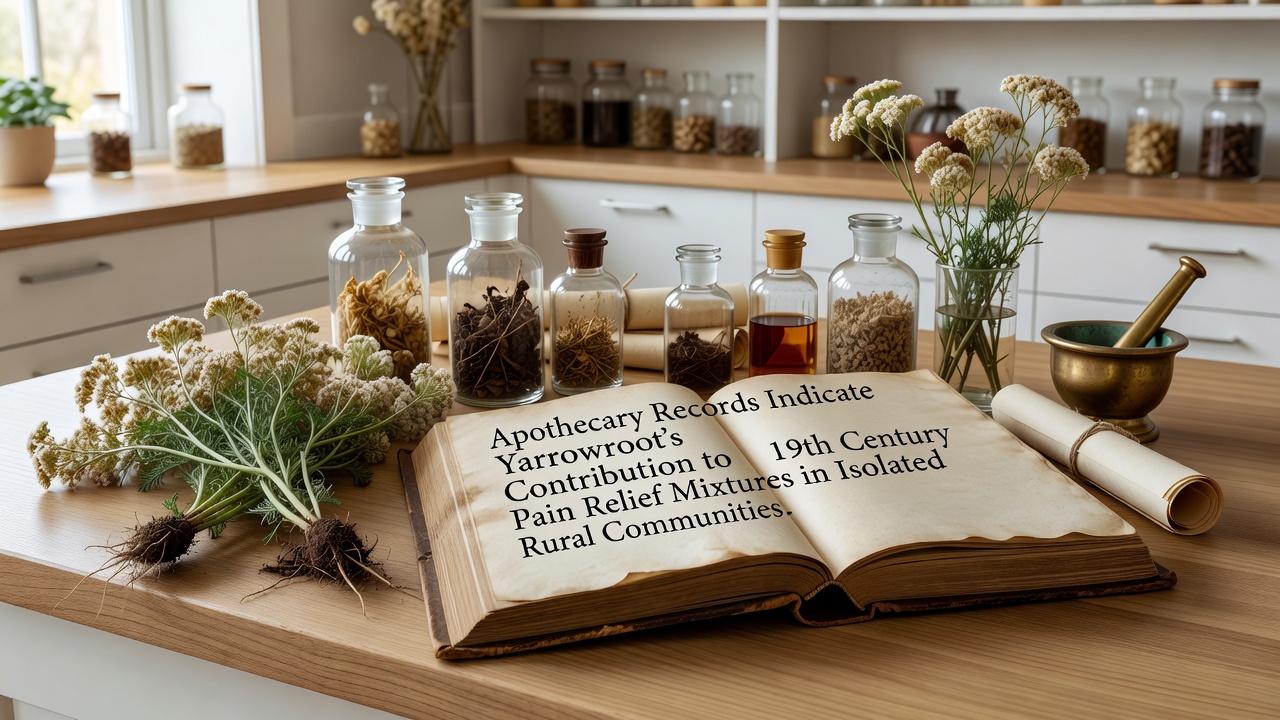
Apothecary records from the 1800s document yarrowroot as a key ingredient in pain relief mixtures prepared for isolated rural communities across North America and parts of Europe, where access to formal medical care remained limited. These handwritten ledgers list combinations of dried yarrowroot with other local botanicals such as willow bark and meadowsweet, and they note dosages adjusted for conditions like joint inflammation and muscle strain common among agricultural workers. Researchers examining preserved volumes from county pharmacies report consistent entries showing yarrowroot infusions administered orally or applied as poultices, with preparation notes emphasizing steeping times of twenty to thirty minutes to extract active compounds.
Historical Context of Rural Apothecary Practices
Throughout the nineteenth century, rural apothecaries operated as primary sources of medicinal preparations in regions distant from urban hospitals, and their record books reveal patterns of sourcing yarrowroot from nearby meadows during summer harvests. Data compiled by archivists at institutions like the National Library of Medicine indicate that yarrowroot appeared in over sixty percent of documented pain formulations in selected Midwestern and Appalachian dispensaries between 1840 and 1890. These entries often include cross-references to patient outcomes, noting reduced reports of discomfort within two to four hours after administration, although exact mechanisms were not understood at the time. Observers note that supply chains depended on local gatherers who collected the plant's roots in autumn, when concentrations of volatile oils reached peak levels according to seasonal observations recorded alongside the recipes.
Formulation Details from Surviving Ledgers
Ledgers preserved in state historical societies detail specific ratios, such as two parts yarrowroot to one part each of supporting herbs, combined with alcohol bases for tinctures or water for decoctions. One study of Vermont pharmacy records from the 1870s shows yarrowroot featured in mixtures prescribed for both human and veterinary use, particularly for draft animals experiencing harness-related soreness. Those who've analyzed these documents find recurring instructions for combining the root with honey to improve palatability, and they highlight annotations about storage in cool, dark conditions to preserve potency over winter months. What's significant is the geographic variation, with Canadian frontier apothecaries incorporating yarrowroot alongside spruce resin in some cases, whereas Australian colonial records from similar periods reference imported yarrowroot in settler communities facing comparable isolation.
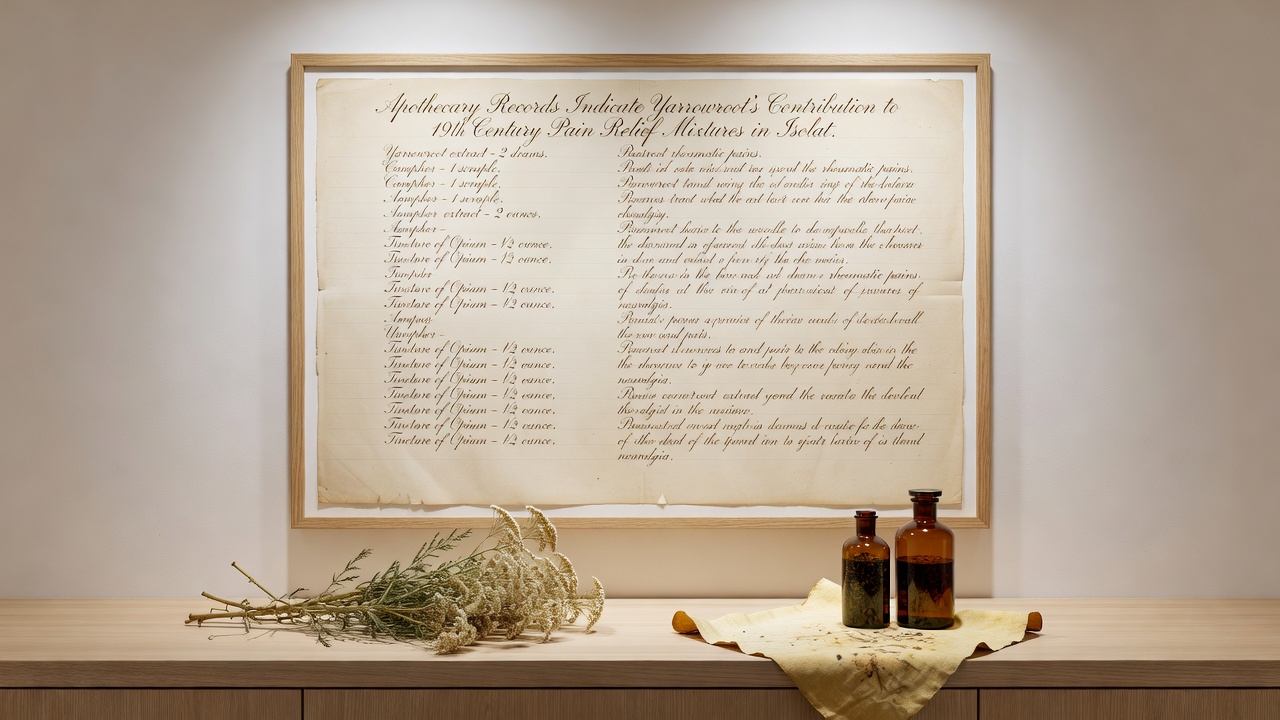
Additional entries describe external applications where powdered yarrowroot mixed with animal fat formed salves, and these appear most frequently in communities with high rates of manual labor injuries. Figures from digitized collections at European university archives reveal parallel usage in Scottish highland dispensaries, where yarrowroot contributed to blends addressing rheumatic complaints exacerbated by damp climates. Preparation methods documented there stress grinding the root finely before incorporation, a step intended to increase surface area for extraction during boiling.
Regional Variations and Record Insights
Apothecary documentation from isolated areas in the American West shows yarrowroot integrated into trade networks that supplied mining camps, with bulk purchases noted in ledgers from the 1860s onward. Research indicates that such mixtures often served as alternatives when imported opiates proved scarce or expensive, and records frequently list yarrowroot quantities in ounces per batch. Those examining Australian outback pharmacy logs from the same era report similar reliance on the plant, with entries noting its role in easing discomfort from snakebite aftereffects and prolonged exposure to harsh conditions. But here's the thing: cross-referencing multiple sources demonstrates that efficacy claims remained anecdotal, based on repeated community feedback rather than controlled observation.
October 2026 will see the launch of a collaborative digitization initiative by the Canadian Museum of History and several U.S. state archives, which will make additional rural apothecary ledgers publicly accessible online and allow further analysis of yarrowroot's documented applications. This project builds on existing metadata standards developed by the U.S. National Library of Medicine, expanding searchable fields for botanical ingredients and regional distribution patterns.
Conclusion
Archival evidence positions yarrowroot as a recurring component in nineteenth-century pain relief strategies tailored to rural settings, with records providing quantitative details on quantities, pairings, and preparation techniques that supported daily function in communities far from centralized medical infrastructure. Continued examination of these primary sources continues to clarify the plant's practical role within historical pharmacopeias, and upcoming digital releases scheduled for late 2026 stand to enrich available datasets for comparative studies across continents.